
Classrooms can be lively, noisy, and full of transitions—and while that energy can be exciting, it can also feel overwhelming for students. Supporting self-regulation (the ability to manage emotions, focus, and energy levels) is one of the most important skills we can build during the school day.
Two simple yet powerful tools—yoga and deep breathing—can fit seamlessly into classroom routines to support attention, calm, and confidence. And best of all, these strategies don’t require special equipment, large spaces, or advanced training.
Why Yoga and Breathing Work for Kids
Sign up for my email list to download a free visual of yoga poses!
- Calms the Nervous System: Slow breathing activates the body’s “rest and digest” system, helping students feel more grounded and safe.
- Boosts Body Awareness: Yoga poses strengthen the connection between body and brain, which helps with posture, balance, and focus.
- Provides Predictable Structure: Routines like a “morning stretch” or “breathing before math” give kids a safe anchor in their day.
- Encourages Emotional Awareness: Breathing gives kids space to notice how they feel before reacting.
- Supports All Learners: Movement and breath are universal tools—they can be modified for students with sensory needs, attention challenges, or anxiety.
10 Classroom Yoga Strategies With Everyday Applications
1. Start the Day with a Yoga Warm-Up
Routine idea: After morning announcements, lead 2–3 simple stretches like Reach for the Sun (arms overhead), Forward Fold (bend to touch toes), and Mountain Pose (standing tall, feet grounded).
Why: Creates a sense of transition from “home” to “school” and resets attention before academics
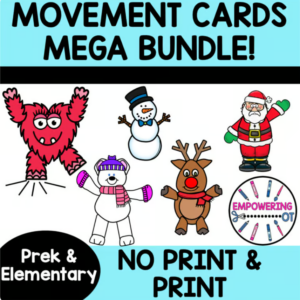
2. Use Theme Movement Breaks to keep it FUN!
Use fun themes for the time of year. For fall, you can pretend to be a leaf and reach up/breathe in and bring the arms down/breathe out. For spring, you can do butterfly stretches and such as stretching arms to fly like a butterfly. If you are looking for a year long theme movement cards, check it out here!
3. Use Poses During Transitions
Waiting in line? Try Tree Pose or Flamingo Balance while kids wait their turn.
Between subjects? Two rounds of Cat-Cow at their desk can re-energize.
Coming in from recess? Butterfly Pose (sit, soles of feet together, knees moving gently) calms big bodies and minds.
4. Use Before Tests
Before tests or exams, help students learn how to calm their bodies by doing 60 seconds of deep breathing.
5. Embed Yoga into Academics
Spelling Stretch: For each letter, stretch arms up, out, or twist.
Math Movement: Balance in Tree Pose while solving a mental math fact.
Story Stretch: After reading a book about animals, act out animal poses.
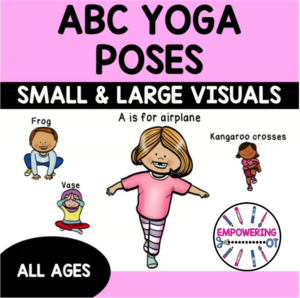
Check out ABC yoga poses, here!
6. In Seat Movement / Yoga Poses
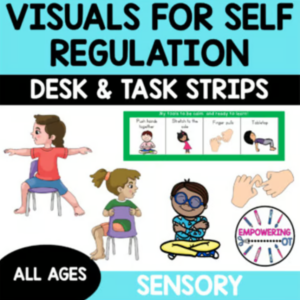
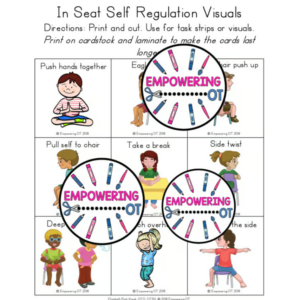
Give students regulating movements that can be perform in their classroom chair. This includes pushing their hands together, pulling their hands apart, chair push ups and other stretches. You can give students visuals on their desk so they can remember these activities when their minds or body needs movement.
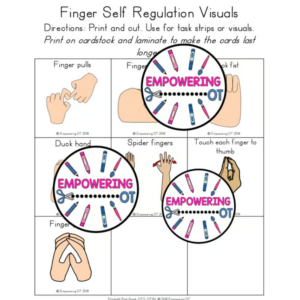
If you want already done visuals that includes both in seat movement and yoga poses, click here to check out visuals for self regulation!
7. Calm Corner
Provide a mat, cards, or visuals where students can choose strategies independently.
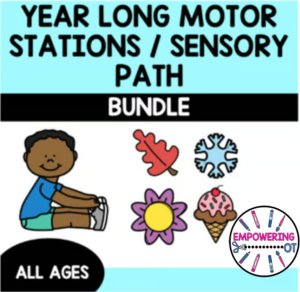
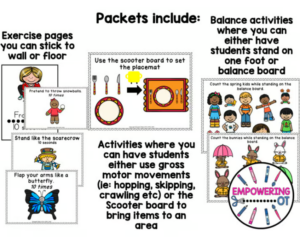
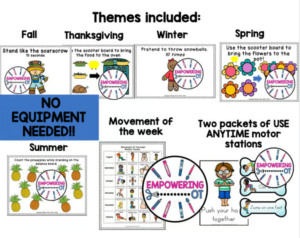
8. Movement Stations / Sensory Paths
9. High Energy in Class – Reset
If the classroom feels high energy after specials, or recess, try for 30-60 seconds of balloon breathing, stretch break or pushing hands together.
10. End the Day with Calm
Try “Quiet Turtles”: curl into child’s pose for 30 seconds, then sit back up slowly.
Pair with deep breathing to leave the classroom feeling settled and ready for home.
Deep Breathing Techniques & How to Use Them Every Day
Sign up for my email list to download a free visual of breathing exercises!
1. Five-Finger Breathing
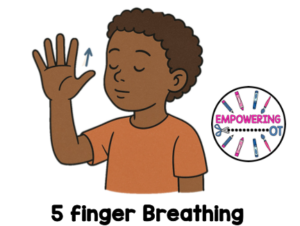
How: Trace one hand with a finger from the other hand. Inhale up, exhale down each finger.
Everyday use: Before a test or after recess to prepare for focused learning.
2. Balloon Breathing
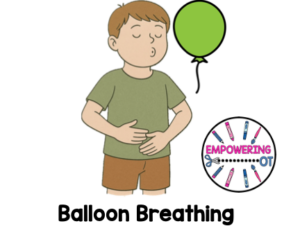
How: Place hands on belly, “inflate” with a slow inhale, “deflate” with a long exhale.
Everyday use: During morning meeting or to calm the class after a loud activity.
3. Square Breathing
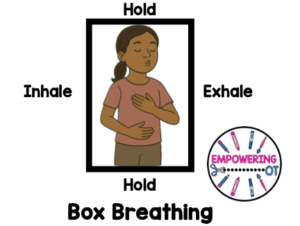
How: Imagine a square. Inhale up one side, hold across, exhale down, hold across.
Everyday use: Use before fire drills, assemblies, or other high-energy transitions.
4. Animal Breathing
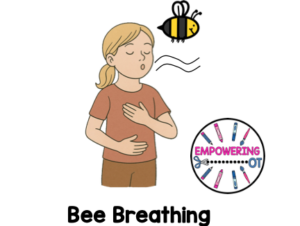
Bunny Breaths: Three short inhales, one long exhale.
Bee Breaths: Hum softly on the exhale.
Everyday use: Build them into science or storytime—kids love playful, themed breathing.
Practical Tips for Teachers
- Keep it short: 1–3 minutes is all you need. Think of it as a mini-reset.
- Model it yourself: When teachers participate, kids take it seriously and feel safe joining in.
- Offer choice: Not all kids want to close their eyes or sit on the floor. Allow students to do a seated or standing version, or just watch.
- Use visuals: Display breathing cards or yoga pose posters in a calm corner so students can self-select strategies.
Sign up for my email list to download a free visual of yoga poses!
- Schedule it: Predictability builds safety. Add yoga or breathing at the same times each day (morning, post-recess, end of day).
- Pair it with SEL: After a “big feelings” lesson, reinforce by practicing a breathing strategy.
Tips for OTs to Help Teachers Incorporate Yoga & Breathing
- Co-Teach: Offer to model a short breathing break or yoga routine during class so teachers can see it in action.
- Provide Visuals: Share printable cards, posters, or calm corner visuals that make it easy for teachers to use strategies independently.
- Keep It Simple: Start with one pose and one breathing technique before adding more.
- Connect to Academics: Show how strategies can be paired with literacy, math, or morning routines so they don’t feel like “extra work.”
- Troubleshoot Together: Ask teachers what times of day are hardest (e.g., post-recess, before dismissal) and suggest strategies tailored to those moments.
- Reinforce Success: Celebrate when teachers try strategies, even briefly—it builds confidence and sustainability.
What You Might Notice Over Time
- Faster recovery after transitions.
- More students using coping skills on their own (“I need to take a balloon breath”).
- Fewer disruptions and more engaged participation.
- A calmer, more connected classroom environment.
Takeaway
Yoga and deep breathing are not about perfection or forcing stillness—they’re about giving students practical tools to notice their bodies, regulate their energy, and feel safe to learn. By weaving short, predictable strategies into the school day, teachers can build a culture of calm, connection, and resilience that benefits every child.
Pro Tip: Pair breathing or yoga with a visual timer or calming music—this helps signal routines and makes strategies feel inviting, not forced.