

Touch → Orientation → Oral-Motor Control
What it is & typical timeline
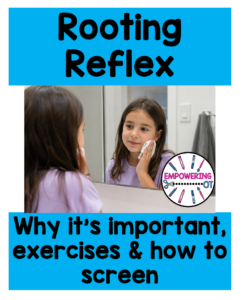
The Rooting Reflex is an early infant reflex that helps a baby locate a food source. When the cheek or area around the mouth is gently touched, the baby typically turns toward the touch and opens their mouth.
This reflex develops before birth and supports early feeding, orientation toward touch, and oral-motor experiences. It is typically strongest during the newborn period and gradually integrates during early infancy, usually by approximately 3–4 months of age.
Check out play based exercises for the rooting reflex, here!
Why it matters (OT • Educators • Parents)
OTs: The rooting reflex is connected with early oral sensory processing, feeding experiences, and responses to touch around the face and mouth. When rooting-like responses persist beyond infancy, some children may show increased sensitivity or automatic responses to facial touch.
Educators: Watch for students who frequently touch or rub around their mouth, react strongly to unexpected facial touch, mouth classroom materials, or become distracted by sensations around the face. These behaviors can have many possible causes and should be considered within the child’s broader sensory and developmental profile.
Parents: Notice whether your child seeks or avoids touch around the cheeks and mouth, frequently mouths non-food objects, or finds certain face-washing, toothbrushing, feeding, or grooming experiences challenging.
What you might notice (school-age)
- Increased sensitivity to touch around the cheeks, lips, or mouth.
- Turning the head or opening the mouth in response to unexpected cheek or facial touch.
- Frequent touching, rubbing, or wiping around the mouth.
- Seeking oral input by chewing or mouthing safe objects.
- Difficulty tolerating face washing, toothbrushing, or other facial-care routines.
- Strong preferences related to food textures or sensations around the mouth.
- Becoming distracted when something touches the face, such as hair, clothing, or food residue.
These signs do not confirm a retained rooting reflex and may also be related to sensory preferences, oral-motor differences, feeding experiences, or other developmental factors.
Quick observational screen (non-diagnostic)
Looking for more information on screening? Check out handouts here!
- With the child comfortable and consenting, observe their response to light touch near the cheek and corner of the mouth.
- Watch for an automatic head turn, mouth opening, or movement toward the touch.
- Compare responses on the left and right sides.
- Notice whether facial touch affects head position, mouth movement, comfort, or attention.
Screening should remain gentle, brief, and non-diagnostic. Never repeatedly touch a child’s face if they indicate discomfort or do not want to participate.
Do / Don’t (language & approach)
✅ Do respect the child’s preferences and boundaries related to facial and oral touch.
✅ Do provide predictable sensory experiences and let the child know before touching their face during grooming, feeding, or therapy activities.
❌ Don’t repeatedly touch or stimulate the face in an attempt to make a reflex “go away.”
❌ Don’t assume chewing, mouthing, food preferences, or facial sensitivity automatically indicate a retained rooting reflex. Consider the whole child and other possible contributing factors.
Classroom supports (Tier 1 • Tier 2 • Tier 3)
Tier 1 (Whole Class):
- Normalize access to appropriate sensory and movement breaks throughout the day.
- Reduce unnecessary unexpected touch to students’ faces and bodies.
- Offer different ways to participate in messy or tactile classroom activities.
- Teach body autonomy and encourage students to communicate sensory preferences.
Tier 2 (Small Group):
- Incorporate playful oral-motor activities such as blowing bubbles, pinwheels, or cotton-ball races when appropriate.
- Pair movement with breathing activities before seated or attention-heavy tasks.
- Offer opportunities for controlled tactile exploration without requiring participation.
- Practice body-awareness activities that help children notice sensations around the face and body.
Tier 3 (Individualized):
- Provide individualized sensory supports based on the child’s preferences and needs.
- Consider appropriate alternatives for children who seek frequent oral input.
- Adapt grooming, feeding, or classroom routines when facial or oral sensations create barriers to participation.
- Collaborate with OT and other appropriate professionals when oral sensory, feeding, or functional concerns affect daily participation.
Home carryover ideas
- Morning Face Routine: Let the child take the lead with washing, drying, or wiping their face. Offer choices about water temperature, washcloth texture, and how much help they want.
- After-Meal Clean-Up: Keep a preferred napkin or cloth available so the child can independently wipe food or moisture from around their mouth when they notice it.
- Toothbrushing Setup: Experiment with toothbrush size, bristle texture, toothpaste flavor, water temperature, and positioning to make oral-care routines more comfortable.
- Hair Away From the Face: If loose hair touching the cheeks is distracting or uncomfortable, offer headbands, clips, ponytails, or other child-preferred options.
- Messy-Mealtime Control: Keep a napkin nearby during meals so children who dislike food on their face can wipe it themselves rather than having an adult unexpectedly reach toward their mouth.
- Notice the Pattern: Pay attention to when facial or oral sensitivities are most noticeable—such as during grooming, eating, cold weather, messy play, or unexpected touch—and adjust the routine accordingly.
Home carryover should focus on comfort, autonomy, and successful participation in everyday routines, rather than adding another set of exercises to the child’s day.
Play-based activities & progressions (short bouts; child-led)
Looking for play-based exercises for the Rooting Reflex? Check out the packet here!
- Straw Soccer: Blow through a straw to move a lightweight ball toward a goal, adjusting the distance as control improves.
- Lip Print Art: Make playful lip shapes and pretend “kisses” toward a mirror or other target without requiring direct facial touch.
- Animal Mouth Game: Copy playful animal movements, such as a fish opening and closing its mouth, a rabbit wiggling its nose, or a lion making a wide face.
- Side-to-Side Target Game: Place interesting objects on alternating sides and encourage the child to visually locate and turn toward each target.
- Sound Hunt: Make a gentle sound from different positions and have the child turn their head to find where it came from, progressing from predictable to varied locations.
- Treasure Turn: While sitting or standing, place preferred objects to the left and right so the child practices purposeful head turning and orientation while keeping the rest of the body comfortable.
Activities should remain playful, optional, and responsive to the child’s sensory preferences. Facial touch is not required for an activity to support the broader sensory-motor skills associated with orientation and oral-motor control.
Data you can track (simple, actionable)
- Comfort with everyday facial-care activities such as washing or wiping.
- Frequency of oral sensory seeking that affects classroom or home participation.
- Level of support needed during toothbrushing, grooming, or mealtime routines.
- Child’s ability to communicate preferences related to facial or oral sensations.
- Teacher/parent observations of participation, comfort, and functional changes over time.
Focus on meaningful participation and comfort, rather than trying to document whether a reflex has simply “disappeared.”
Collaboration & self-advocacy scripts
Adult→Child: “I’m going to help wipe your face. Would you like to do it yourself, or would you like me to help?”
Teacher→Team: “S seems especially sensitive to unexpected touch around her face. We’re giving her more control over sensory experiences and tracking whether that helps her participate comfortably.”
Parent→Team: “We’ve noticed that face washing and toothbrushing can be uncomfortable. What supports could make those routines feel more predictable and manageable?”
Child→Adult: “I don’t want my face touched. I can do it myself.”
The Reflex Integration Bundle Toolkit: Making It Easy for Therapists, Teachers & Parents
If you’re looking for a complete, play-based reflex integration program, the Reflex Integration Bundle Toolkit is your go-to solution. Created by an occupational therapist, this resource is designed for real-life use at home, in the classroom, or during therapy.
✨ What’s Inside This All-in-One Reflex Toolkit:
- ✅ 44 handouts explaining how each primitive reflex impacts movement, learning, and sensory/emotional development
- ✅ 12 themed exercise packets with over 320 play-based activities targeting every major reflex
- ✅ Black-and-white printable visuals for daily use—perfect for visual schedules and classroom routines
- ✅ Built-in regulation strategies and explanations for why each movement helps
- ✅ Designed for all developmental levels and sensory profiles
- ✅ Perfect for school-based OT, early intervention, home programs, and classroom supports
This toolkit is more than just exercises—it’s a holistic system for supporting regulation, body awareness, and developmental readiness through joyful movement.
✅ Ready to support your child or student with reflex integration? Explore the Reflex Integration Bundle Toolkit here.
Rooting Reflex in Children, Rooting Reflex Signs, Retained Rooting Reflex, Rooting Reflex Integration, Rooting Reflex Exercises, Rooting Reflex Activities, Primitive Reflex Red Flags, Retained Reflexes in Children, Primitive Reflex Integration, Reflex Integration Therapy, Play-Based Reflex Activities, Occupational Therapy Reflex Activities, Primitive Reflex Checklist, Primitive Reflex Exercises for Kids, Oral Sensory Processing, Oral Motor Activities for Children, Sensory Processing and Primitive Reflexes, Reflex Integration for Parents, Reflex Integration for Teachers, Reflex Integration OT Resources, Primitive Reflexes and Occupational Therapy, Rooting Reflex Occupational Therapy, Rooting Reflex School Supports, Rooting Reflex Home Activities



2 Comments